한복
Hanbok
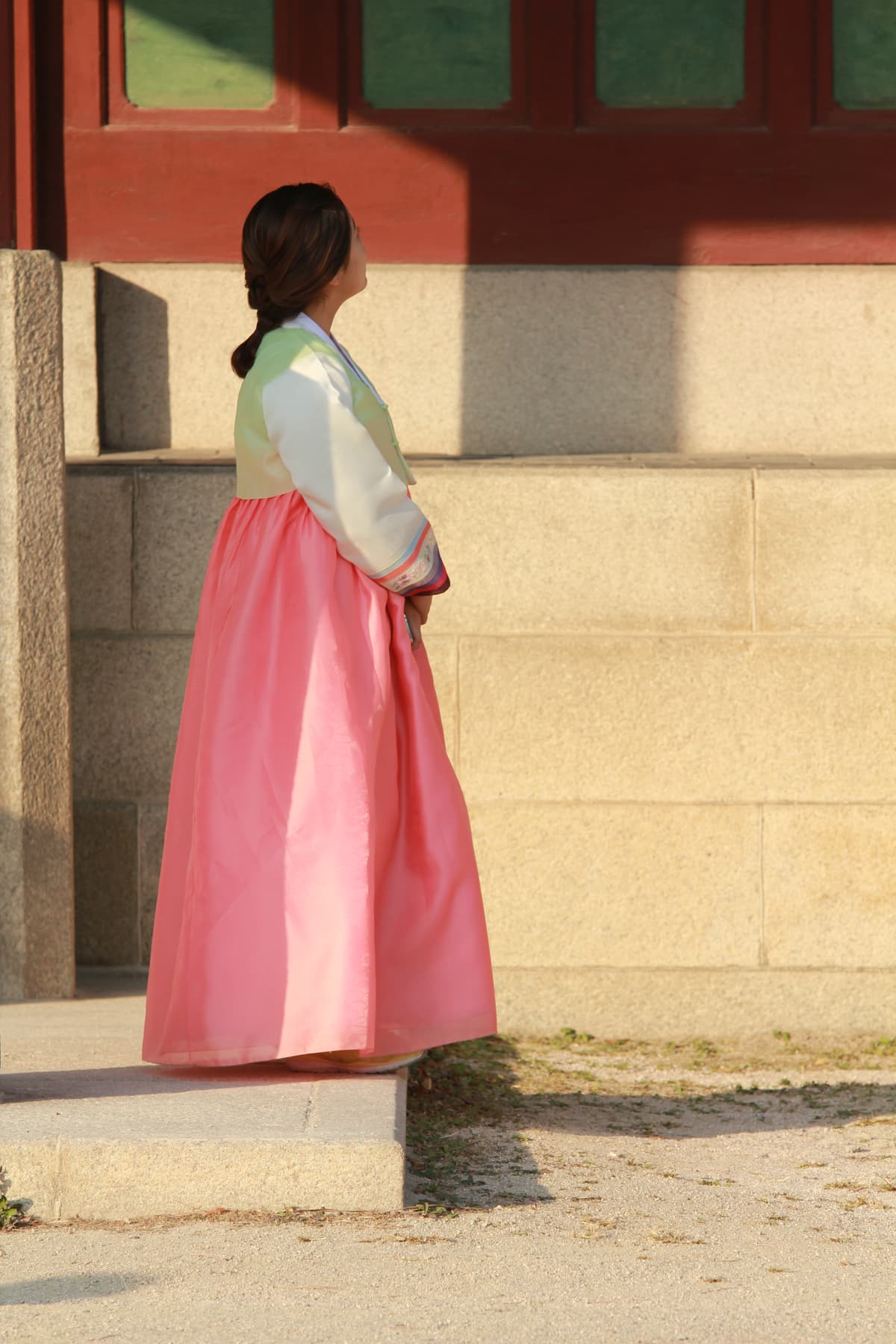
한복은 한국의 역사와 문화, 정체성이 깃든 전통 의복입니다. 시대에 따라 형태와 색, 소재 등이 변화해 왔지만, 저고리에 바지나 치마를 갖추어 입는 기본 구성은 오늘날까지 이어지고 있습니다. 전통적으로 남자는 저고리와 바지, 여자는 저고리와 치마를 기본으로 입고, 필요에 따라 두루마기 등을 덧입습니다. 한복을 지어 명절과 혼례, 잔치 등에서 갖추어 입는 생활문화를 ‘한복생활’이라고 합니다. 한복생활은 오랜 역사 속에서 한국인의 정체성과 가치를 이어 온 전통 생활관습이자 전통지식으로, 2022년 국가무형유산으로 지정되었습니다. 오늘날 한복은 특별한 날에 입는 옷을 넘어 교복과 근무복 등으로도 활용되며, 일상에 맞는 다양한 모습으로 이어지고 있습니다.
EnglishHanbok is Korea’s traditional clothing, reflecting the country’s history, culture, and identity. Although its shapes, colors, and materials have changed over time, the basic combination of a jeogori (jacket) with trousers or a skirt has continued to this day. Traditionally, men wear a jeogori and baji (trousers), while women wear a jeogori and chima (skirt), sometimes adding an outer garment such as a durumagi (overcoat). “Hanbok saenghwal” (hanbok lifestyle) refers to the cultural practice of making and wearing hanbok for traditional holidays, weddings, and other celebrations. Passed down through generations, this practice encompasses traditional customs and knowledge that reflect Korean identity and values. It was designated as National Intangible Heritage of Korea in 2022. Today, hanbok is worn beyond special occasions. It has also been adapted for school and work uniforms, and continues to evolve in forms suited to everyday life.